
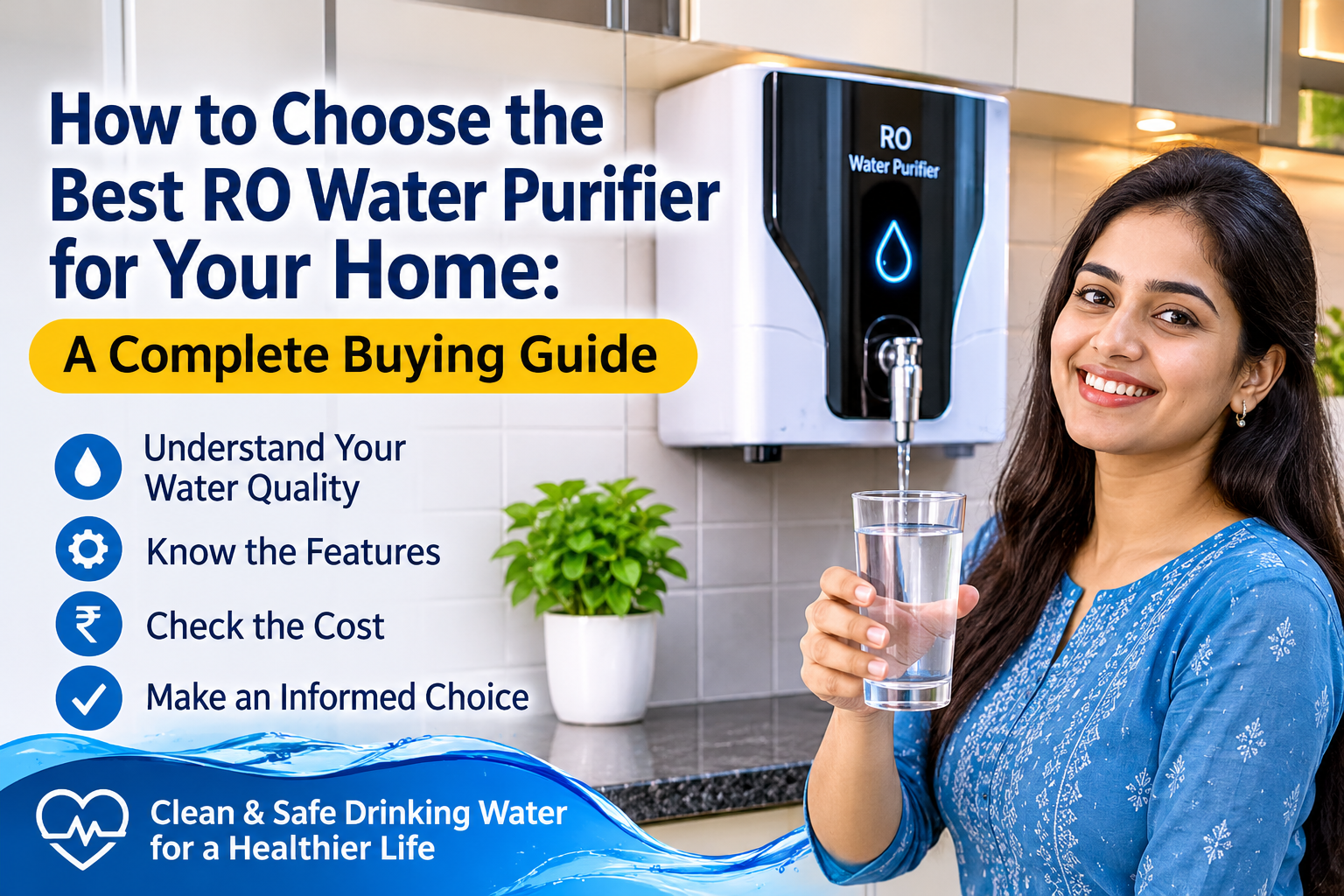
Choosing the right water purifier for your home is an important decision. Clean drinking water is essential for everyday life, but with so many water purifiers available in the market, selecting the right one can be confusing. RO, UV, UF, TDS controllers, mineral enhancers and multiple purification stages — each product comes with different features and promises.
However, the best water purifier is not necessarily the one with the most features or the highest price. It is the one that matches your water quality, household requirements and maintenance budget.
In this guide, we will explain the important factors to consider before buying an RO water purifier so that you can make an informed decision for your home.
1. Understand Your Home's Water Quality First
Before purchasing a water purifier, understand the quality and source of your water supply.
Homes in India commonly receive water from different sources:
- Borewell Water: Groundwater may contain higher levels of dissolved salts, hardness, iron or other contaminants depending on the location.
- Municipal Water: Treated water supplied by local authorities, although its quality can vary depending on treatment and distribution conditions.
- Tanker Water: Its quality may differ from one supplier and delivery to another.
- Mixed Water Supply: Some homes receive a mixture of municipal, borewell or tanker water.
The purification technology you need depends on the actual quality of your water. Getting your water tested through a reliable laboratory is a sensible first step, especially if you are unsure about its source or quality.
2. Check the TDS Level of Your Drinking Water
TDS stands for Total Dissolved Solids. It represents the combined concentration of dissolved substances in water, such as calcium, magnesium, sodium and other dissolved salts.
A TDS meter can provide a quick estimate of the dissolved solids in your water. However, remember that TDS alone cannot tell you whether water is safe to drink. It does not identify individual contaminants or detect all harmful microorganisms.
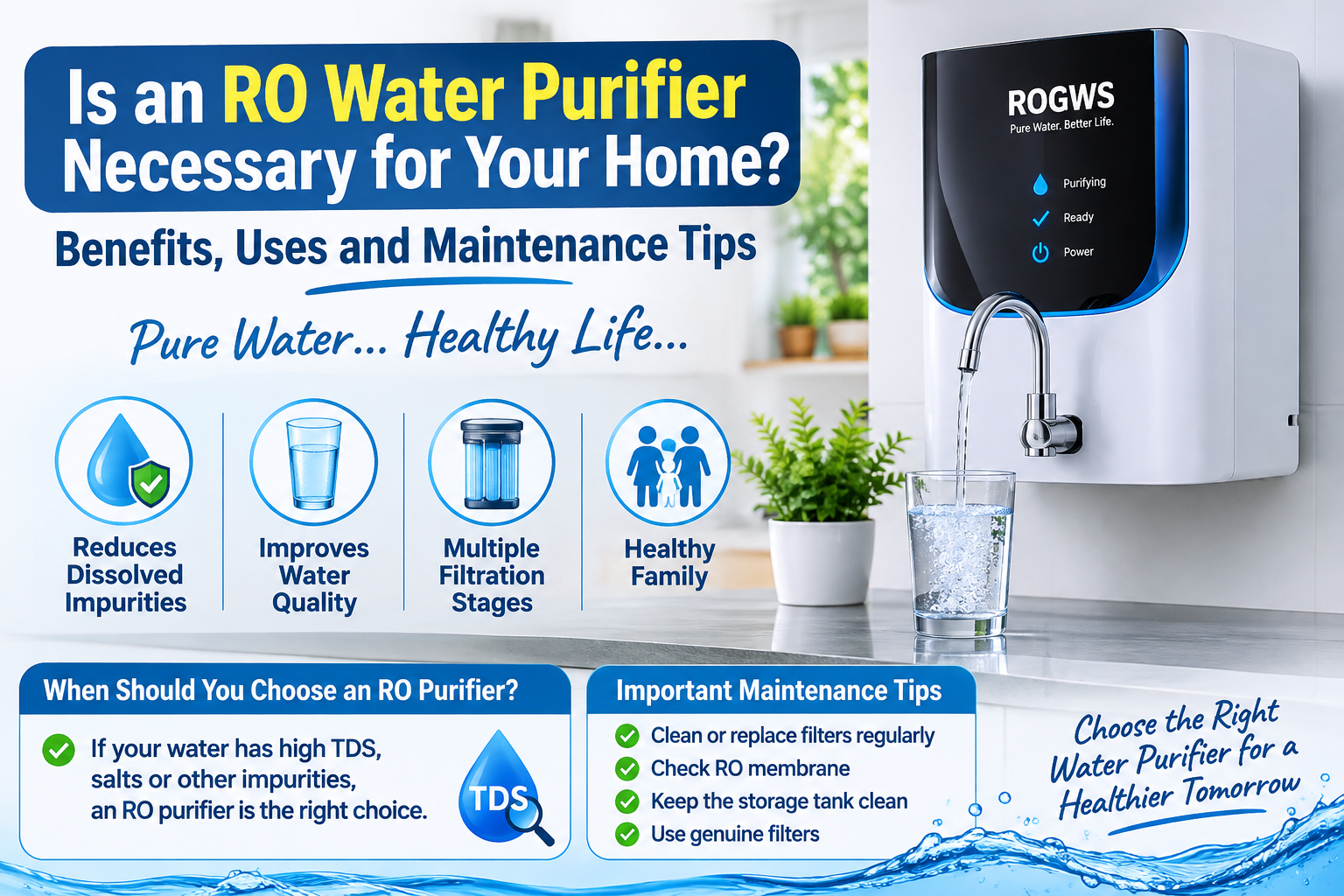
An RO purifier is particularly useful when water contains excessive dissolved salts or certain dissolved contaminants that need to be reduced.
Important: Do not select an RO purifier based only on a TDS reading. Water testing and an understanding of the water source are important before choosing a purification system.
3. Understand the Difference Between RO, UV and UF Technology
Different purification technologies work in different ways. Understanding their functions will help you choose a suitable purifier.
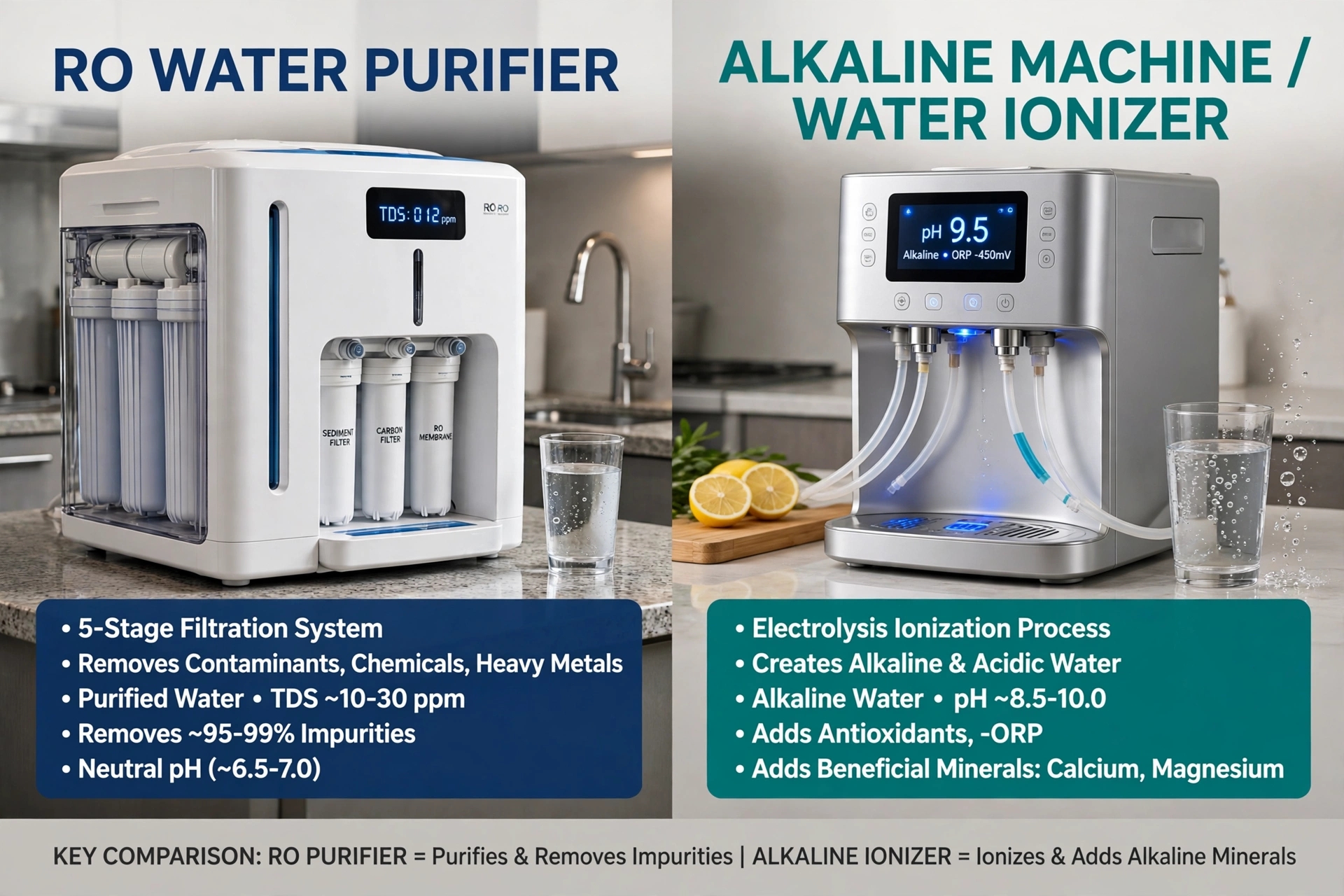
RO (Reverse Osmosis)
RO technology uses a special semi-permeable membrane to reduce dissolved salts and several other dissolved contaminants from water.
It can be useful for water with high TDS or certain dissolved impurities. However, RO systems also produce reject water, and their suitability depends on the incoming water quality.
UV (Ultraviolet)
UV technology uses ultraviolet light to inactivate many microorganisms, including bacteria and viruses.
It does not remove dissolved salts, hardness or most chemical contaminants.
UF (Ultrafiltration)
UF technology uses a membrane to remove suspended particles and many microorganisms. It generally does not remove dissolved salts.
Which Technology Should You Choose?
There is no single technology that is best for every home.
- RO may be appropriate when dissolved contaminants need to be reduced.
- UV may be useful when microbial contamination is a concern.
- UF may help with suspended particles and certain microorganisms.
- A combination of technologies may be appropriate when water testing identifies multiple concerns.
Choose the purification system according to your water test results rather than simply buying a model with the maximum number of purification stages.
4. Look for These Important Features
Once you understand your water quality, compare the features of different water purifiers.
Multi-Stage Purification
Some water purifiers combine sediment filtration, activated carbon filtration, RO membranes, UV treatment and other stages.
Each stage should have a clear purpose. More stages do not automatically mean better purification.
Storage Tank Capacity
Consider the number of people in your household and your daily drinking water requirements.
A suitable storage capacity helps ensure that purified water is available when needed.
Filter Replacement Indicators
Filter-life indicators and service alerts can help you remember when maintenance is due.
Some advanced models also provide alerts for membrane or filter replacement.
Water-Saving Features
RO purification can generate reject water. If you choose an RO system, check its water recovery performance and understand how much water it rejects under your home's operating conditions.
A model with better water efficiency can help reduce unnecessary water wastage.
Mineral Enhancement
Some models include mineral enhancement or mineral balancing features.
Understand what these features actually do and check the manufacturer's specifications instead of assuming that every additional mineral cartridge is necessary.
5. Consider Your Daily Water Consumption
The right water purifier should comfortably meet your household's drinking water needs.
Before buying, consider:
- Number of family members.
- Daily drinking water consumption.
- Storage tank capacity.
- Purification speed.
- Availability of water during power cuts.
- Frequency of filter replacement.
For a larger household, storage capacity and purification output may be especially important.
Also check whether the purifier can be installed conveniently in your kitchen and whether the installation area has the required water supply and electrical connection.
6. Check Maintenance Costs Before Buying
The purchase price is only one part of the total cost of owning a water purifier.
RO water purifiers require regular maintenance to perform properly. Depending on the model and incoming water quality, maintenance may include:
- Sediment filter replacement.
- Pre-carbon filter replacement.
- RO membrane replacement.
- UV lamp replacement, if applicable.
- Cleaning and sanitisation of the storage tank.
- Checking pipes, connectors and water leakage.
- Periodic servicing.
Before purchasing, ask the seller or manufacturer about the cost and recommended replacement interval of each filter.
Also check whether genuine spare parts and authorised service support are available in your area.
A purifier with a reasonable purchase price but expensive or difficult-to-find replacement filters may cost more in the long run.
7. Choose a Reliable Brand with Good Service Support
A water purifier is an appliance that needs regular attention. Therefore, after-sales service is just as important as product features.
Before buying, check:
- Availability of service technicians in your area.
- Warranty coverage.
- Availability of original filters and membranes.
- Customer support response time.
- Annual maintenance contract (AMC) options.
- Transparency of service and replacement charges.
Do not choose a product based only on discounts or promotional offers. Reliable service support can make a significant difference over the life of the purifier.
8. Common Mistakes to Avoid When Buying an RO Water Purifier
Many buyers focus only on price, appearance or advertised features. Avoid these common mistakes:
- Buying RO without checking water quality: RO may not be necessary for every water source.
- Depending only on TDS: A TDS reading does not identify every possible contaminant.
- Choosing the highest number of purification stages: Every stage should serve a useful purpose.
- Ignoring maintenance expenses: Filter and membrane replacement costs should be considered before purchase.
- Overlooking reject water: Understand the water recovery performance of the purifier.
- Ignoring warranty and service availability: A purifier without dependable service support can become difficult to maintain.
- Delaying filter replacement: Follow the manufacturer's maintenance schedule and service recommendations.
9. Is an RO Water Purifier Suitable for Every Home?
No. An RO water purifier is not necessary for every household.
If your water supply is already properly treated and does not contain excessive dissolved contaminants, another suitable purification method may be sufficient.
However, if testing identifies high dissolved solids or contaminants that RO technology is designed to reduce, an RO purifier may be an appropriate option.
The correct decision should be based on water quality, local conditions and the performance of the selected purification system.
10. Final Checklist Before Buying an RO Water Purifier
Use this simple checklist before making your purchase:
- Have you checked the source of your drinking water?
- Have you tested the water quality?
- Do you understand the TDS level and its limitations?
- Is RO technology actually required for your water?
- Is the storage capacity suitable for your household?
- Are filter replacement costs affordable?
- Does the purifier have reliable service support?
- Have you checked its water recovery and reject water performance?
- Are warranty terms and replacement parts clearly explained?
Taking time to compare these points can help you avoid unnecessary expenses and select a purifier that meets your actual requirements.
Conclusion
Choosing the best RO water purifier for your home is about understanding your water quality and selecting the right purification technology.
Instead of buying a purifier simply because it has more features or a higher price, focus on water testing, purification performance, maintenance expenses, storage capacity and after-sales service.
A properly selected and regularly maintained water purifier can help provide suitable drinking water for your household. Make an informed decision, follow the manufacturer's maintenance instructions and check your water quality whenever necessary.
Looking for reliable water purification guidance? Explore the ROGWS blog for more information about RO water purifiers, drinking water quality, maintenance and practical tips for your home.
Naresh Sharma
2026-11-27 17:11:28A very informative and helpful guide! Choosing the right RO water purifier can be confusing, especially with so many options and technologies available in the market. This article clearly explains the differences between RO, UV and UF, the importance of checking water quality and TDS, and the maintenance costs to consider before buying. The buying checklist is particularly useful for homeowners. Thanks for sharing such practical information!